
How to Move from Paper-Based Manufacturing to Digital Manufacturing

Paper-based manufacturing uses paper travellers, printed work instructions, handwritten records, and spreadsheets to manage production. Manufacturers often move away from paper-based systems when production becomes harder to control and teams need better consistency, traceability, and visibility during production.
Common problems with paper-based manufacturing include missing paperwork, disconnected production updates, delayed quality checks, and limited live visibility across the shop floor.
This article explains a practical 4-step approach manufacturers use when moving from paper-based manufacturing to digital production.
Production Records Start with a Clear Process
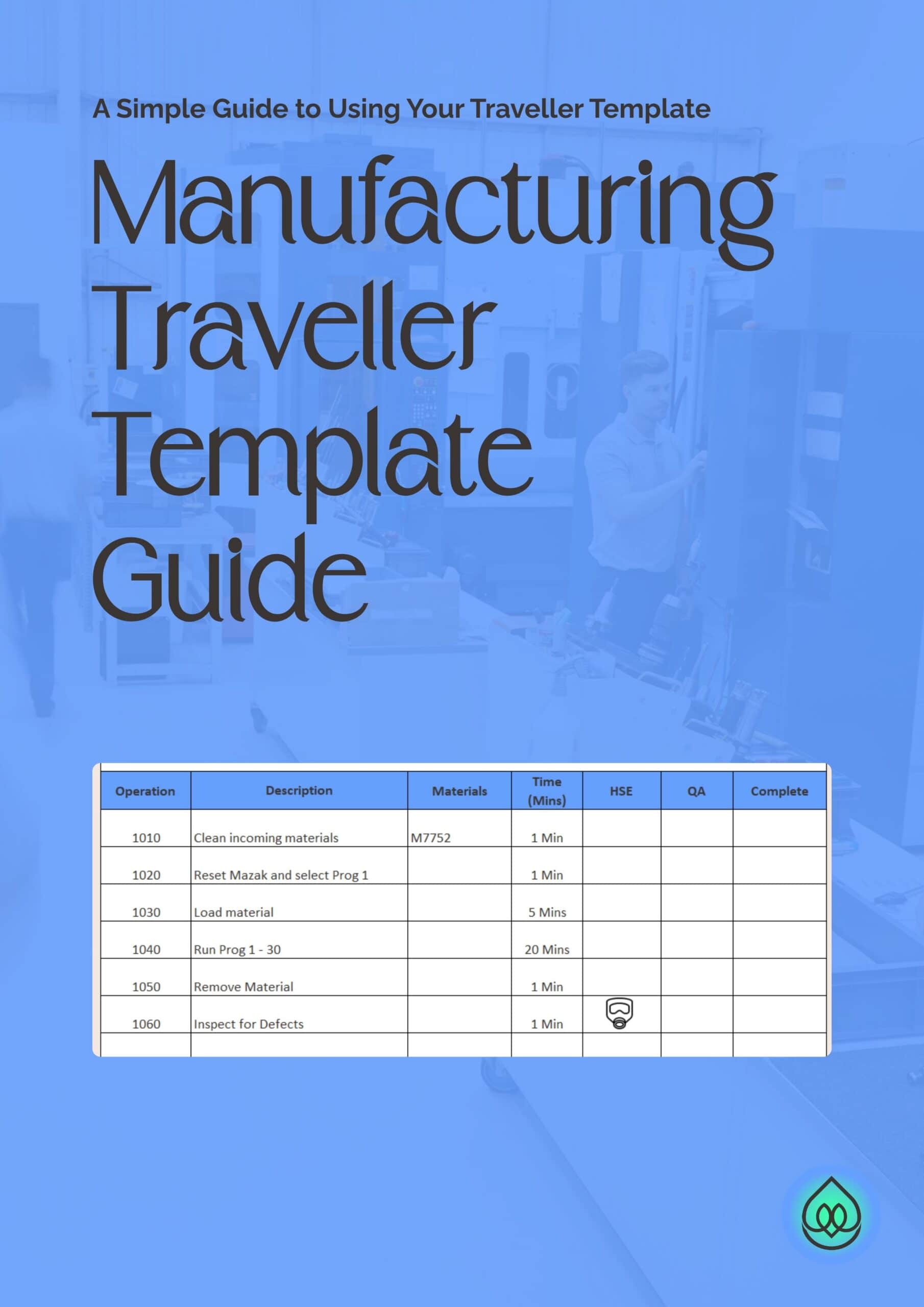
The Manufacturing Traveller Template helps standardise how work, checks, and production records are captured during the build process.
Before Moving to Digital Production
Moving from paper-based manufacturing to digital production is not just about replacing paperwork with software. Manufacturers often get better results when they improve and refine the production process while moving away from paper travellers, spreadsheets, and handwritten production records.
The 4 steps below outline a practical approach manufacturers can use when moving from paper-based manufacturing to digital production.
Step 1: Standardise the process

One of the biggest challenges with paper-based manufacturing is that production processes often vary between operators, shifts, or departments. Instructions can be interpreted differently, paperwork may be completed inconsistently, and production knowledge often sits with individual operators rather than within a clearly defined process.
Before implementing digital production systems, manufacturers often get better results when the production process is standardised first. This usually involves defining the correct workflow, setting the sequence of production steps, and creating clearer production instructions and records before moving away from paper-based processes.
Step 2: Build Quality Checks into Production
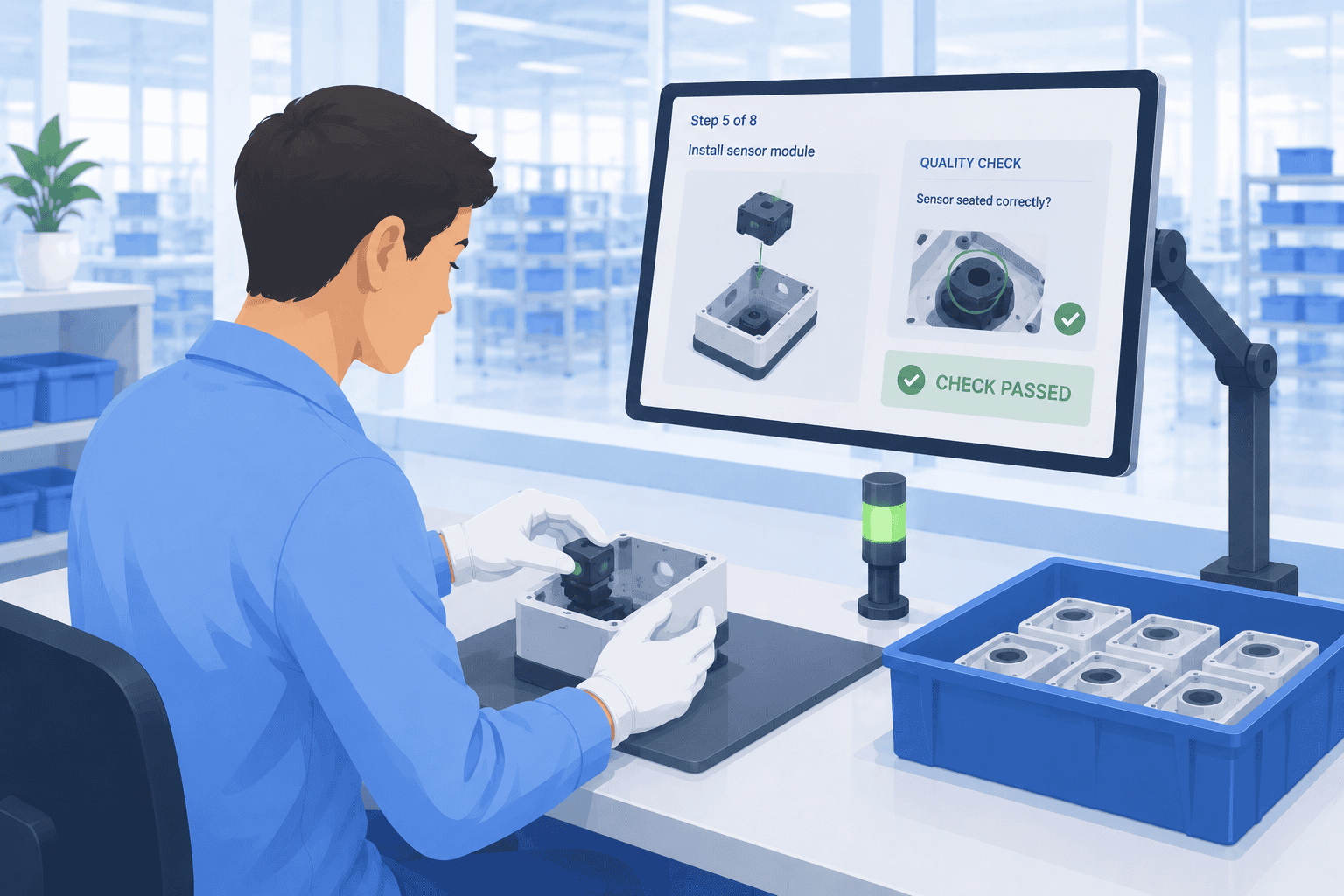
In paper-based manufacturing environments, quality checks are often completed separately from the production process itself. This can make it harder to catch issues during the build, especially when records are completed later or quality checks rely on manual sign-offs.
Digital production workflows allow quality checks to be built directly into the process rather than treated as a separate activity after assembly is complete. This helps ensure checks happen at the correct stage of production and reduces the risk of defects moving further through the process.
Embedding quality checks into the workflow also creates clearer production records and improves traceability throughout the build process.
Read our guide to embedding quality control into production.
Spot Gaps in Your Traceability Process
The Traceability Gap Check helps identify missing records, disconnected quality checks, and areas where production visibility becomes difficult to maintain.
Step 3: Improve Production Visibility
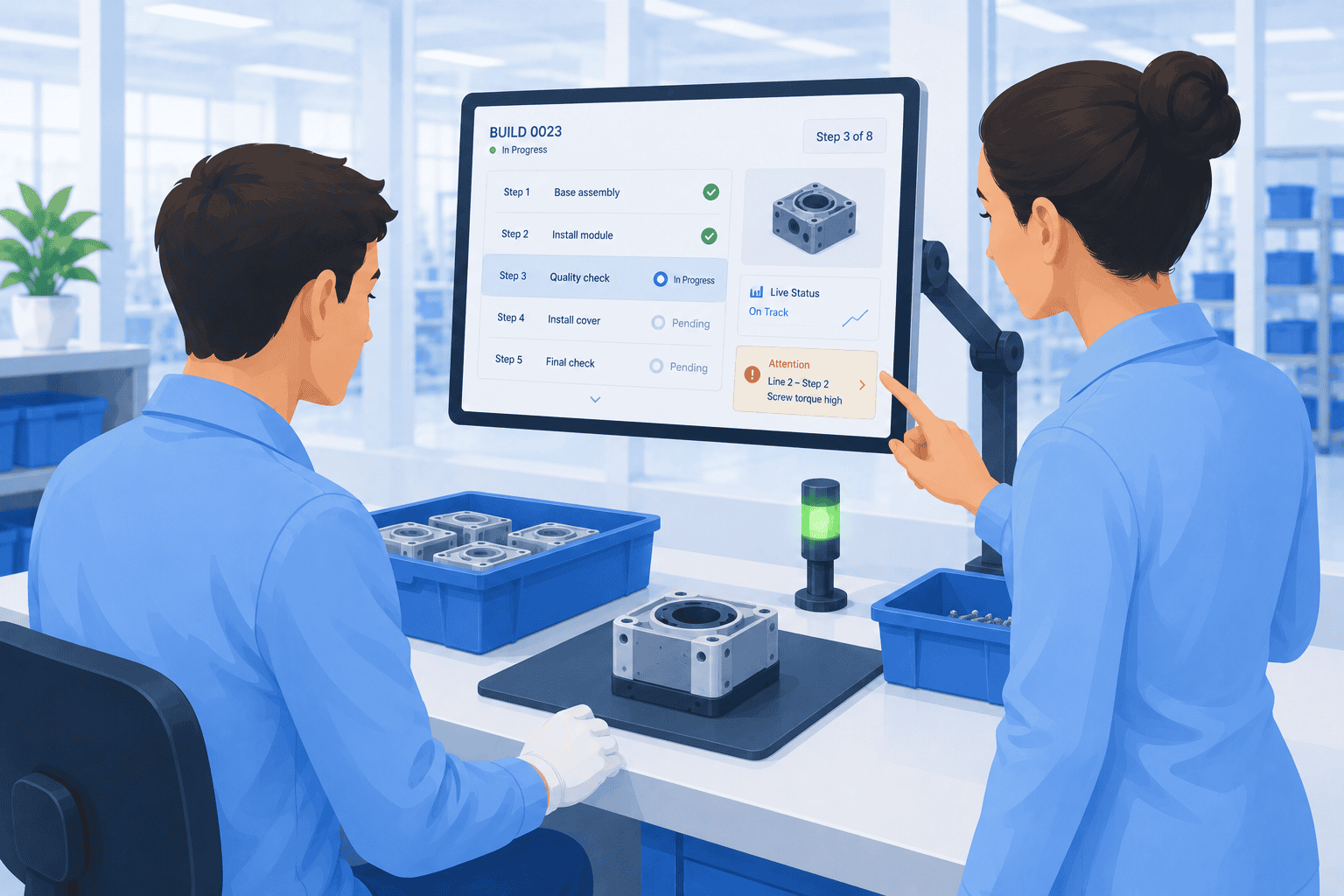
In paper-based manufacturing environments, production information is often updated manually through paperwork or spreadsheets after work has already been completed. This can make it difficult for supervisors and production teams to see what is happening on the shop floor in real time.
Digital production systems allow production updates, traceability records, and job progress to be captured live during the build process rather than recorded later on paper. This gives production teams better visibility into bottlenecks, delays, and issues affecting production while work is still taking place.
Having real-time production information also makes it easier to react to problems earlier, track work across operators and stages, and maintain more accurate production records throughout the process.
Step 4: Create a Process for Continuous Improvement

Once production information becomes more consistent and visible across the shop floor, manufacturers can begin improving processes more effectively over time. Production data can help identify recurring issues, bottlenecks, repeated defects, or areas where operators may need additional support.
Regular reviews and feedback from operators and supervisors can help teams refine workflows, improve production standards, and make adjustments as production requirements change.
Continuous improvement helps ensure production processes continue evolving as operations, products, and customer requirements change over time.
Moving from Paper-Based Manufacturing to Digital Production

As manufacturers move away from paper travellers, spreadsheets, and handwritten production records, digital production systems help create more control during the build process. Operators can follow guided workflows at the workstation, complete quality checks within production, and capture production records as work is carried out.
This also improves production traceability and visibility by keeping production information connected to the process itself rather than spread across separate paperwork and manual updates.
Tascus runs at the workstation and helps manufacturers standardise workflows, embed quality checks into production, and capture live production records throughout the build process.

Review Your Production Line
The Production Review identifies where variation and delays are happening in your process.