

What is a Manufacturing Execution System?

A Manufacturing Execution System (MES) is software used by manufacturers to control and track production while products are being built. It gives operators digital work instructions, records production data as work is completed, and helps ensure each stage of production is carried out correctly.
Manufacturers use MES to reduce production errors, improve traceability, standardise processes across operators and shifts, and gain better visibility into production.
In this article, we’ll explain what an MES does, the production problems MES helps solve, and what MES looks like in practice on the shop floor.
What Does a Manufacturing Execution System Do?
A Manufacturing Execution System (MES) helps manufacturers control and track production while work is being carried out.
It guides operators through the production process using digital work instructions, records production data as work happens, and helps ensure jobs are completed in the correct sequence.
Manufacturers use MES to:
- Provide workstation instructions
- Control production routing
- Embed quality checks into production
- Record traceability data
- Track work in progress
- Monitor live production activity
As work is completed, MES creates a digital production record containing information such as serial numbers, inspection results, process timings, and operator activity.
Common Problems Without an MES
Inconsistent Production Processes
Without a controlled production system, operators and shifts often develop different ways of completing the same job. Over time, this can lead to variation in product quality, production delays, and rework.
Missing Production Visibility
Many manufacturers still rely on manual updates, spreadsheets, or verbal communication to track production activity. This makes delays, bottlenecks, and stalled work in progress harder to identify quickly.
Paper-Based Traceability
Paper travellers and handwritten production records can be difficult to manage consistently. Records may be incomplete, difficult to retrieve, or filled in after production has already taken place, creating traceability gaps.
Late Quality Checks
In some manufacturing environments, quality checks only happen during final inspection rather than throughout production. When problems are identified late in the process, manufacturers often face more rework, scrap, and production delays.
Disconnected Production Data
Production information is often spread across spreadsheets, whiteboards, paper records, and standalone systems. As production becomes more complex, maintaining accurate production status and traceability records becomes more difficult.
What MES Looks Like on the Shop Floor
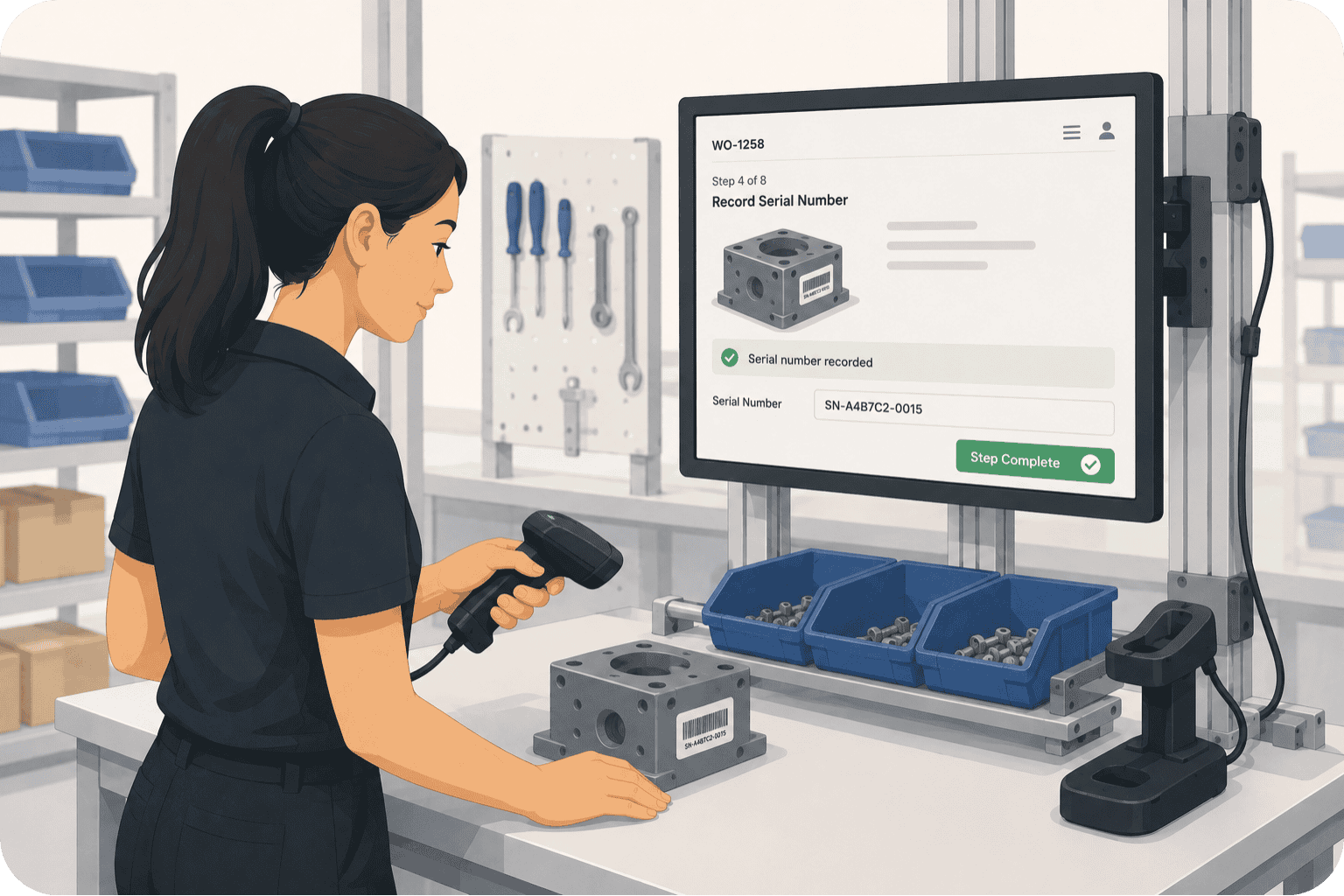
Installed at the workstation, MES gives operators access to digital work instructions, production steps, drawings, and quality checks during assembly.
As work is completed, the system records production data such as serial numbers, inspection results, operator activity, and process timings, creating a live production record throughout the build process.
When Manufacturers Typically Introduce MES
Manufacturers typically introduce MES when manual production processes are no longer reliable enough to support day-to-day operations.
This often happens as production becomes more complex, more operators and shifts are added, or traceability and audit requirements increase. At this stage, paper records, spreadsheets, and manual updates can become difficult to manage consistently across production.
Spot Traceability Gaps in Production
The Traceability Gap Check helps manufacturers review how production records, process tracking, and traceability are currently managed across the factory floor.

Production Control with Tascus
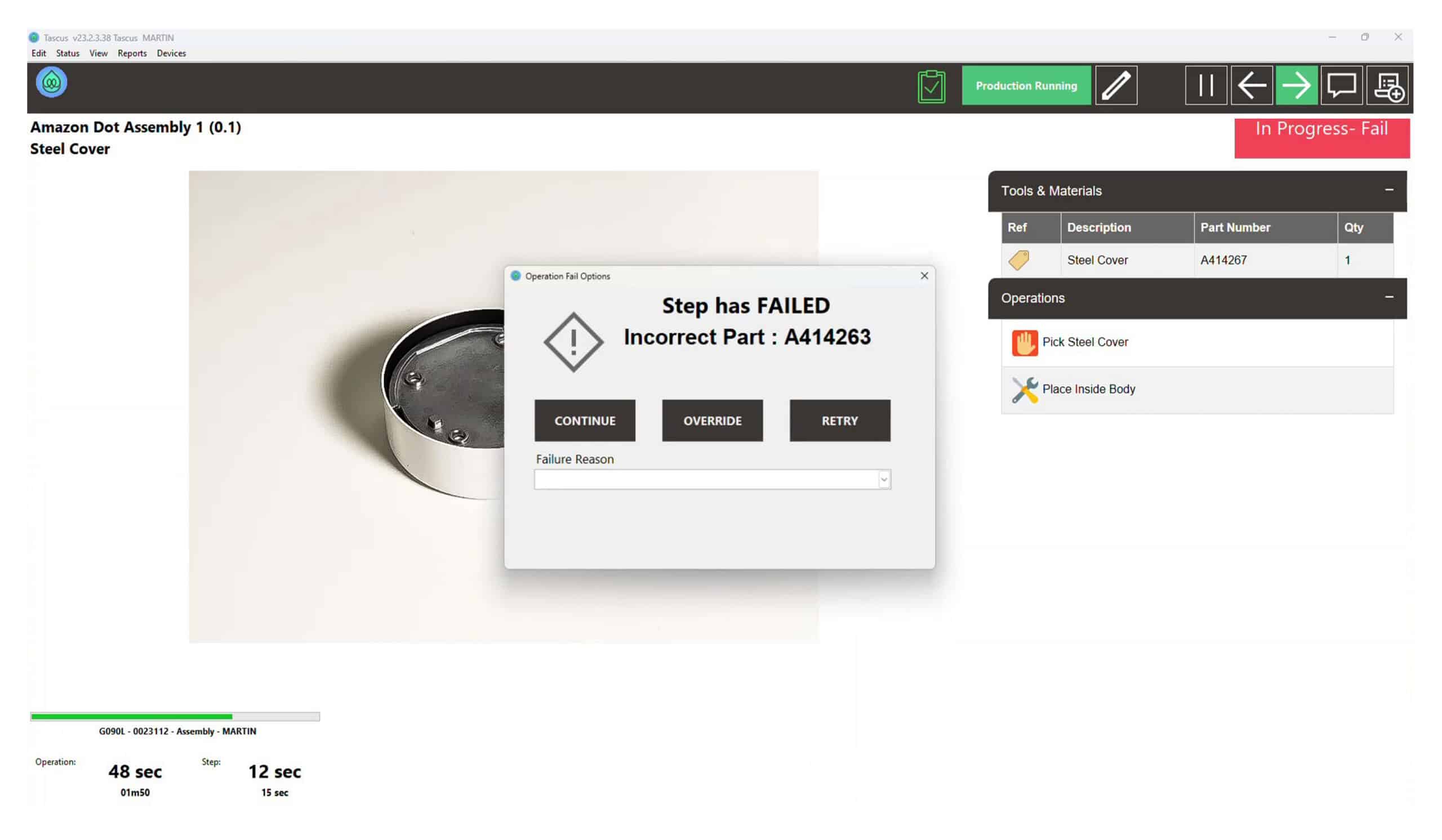
Tascus MES is designed to help manufacturers bring more consistency and control into daily production through workstation-level process guidance, production tracking, and traceability.
But successful MES implementation is not just about installing software. Production processes, operator workflows, quality requirements, and traceability expectations all need to work together in practice on the shop floor.
Metis Automation works closely with manufacturers throughout implementation and rollout to help build production processes that are practical, repeatable, and easier to manage day-to-day.
FAQs
What is MES in manufacturing?
MES stands for Manufacturing Execution System. It is software used to control, guide, and track production while work is being carried out on the shop floor.
What is the difference between ERP and MES?
ERP systems are typically used to manage business functions such as planning, purchasing, inventory, and finance. MES focuses on production execution, helping manufacturers control workflows, track production activity, and record manufacturing data in real time.
What problems does MES solve?
MES helps manufacturers control production processes, improve traceability, and track work in progress more consistently.
How does MES improve traceability?
MES records production data as work is completed, creating digital traceability records linked to products, serial numbers, batches, operators, inspections, and production processes.
Can MES replace paper travellers?
Yes. Many manufacturers use MES to replace paper travellers with digital production workflows, allowing production records and process checks to be completed electronically during production.
What industries use MES software?
MES software is widely used across manufacturing industries including automotive, aerospace, electronics, medical devices, food production, and industrial equipment manufacturing.
Is MES suitable for high-mix manufacturing?
Yes. MES is commonly used in high-mix manufacturing environments where production consistency, traceability, and process control are important across different products and production routes.
Talk through your
production process
Discuss how production currently runs, where issues are
appearing, and what’s making consistency
harder to maintain.