

How to Implement Traceability in Manufacturing

Traceability in manufacturing helps manufacturers track how products move through production, what materials were used, and what checks were completed along the way. It plays an important role in quality control, audits, and resolving production issues when they occur.
This guide breaks down the practical steps involved in implementing traceability across a manufacturing process.
Implementing traceability in manufacturing involves defining what needs to be tracked, where data is captured during production, and how records are created consistently as work is carried out. This means linking materials, process steps, inspections, and outputs into a single record for each product.
For a deeper explanation of how traceability works, see Manufacturing Traceability Explained.
Below is a practical step-by-step approach to put traceability in place on the shop floor.
Step 1: Define What Needs to Be Tracked
Start by setting out exactly what information must be recorded for each product as it moves through production. This should reflect your quality requirements, audit requirements, and any customer-specific needs.
In most cases, this means assigning a clear product identifier, recording the steps the product passes through, capturing inspection results at the right stages, and logging operator actions where sign-off is required.
Be specific. If the requirement is unclear, the data will be inconsistent.
Avoid trying to capture everything. Focus only on what is needed to meet audit expectations, trace a product back through production, and confirm that the correct process was followed.
If this step is not clearly defined, gaps will appear later in the process, even if the rest of the system is set up correctly.
Step 2: Map the Production Process
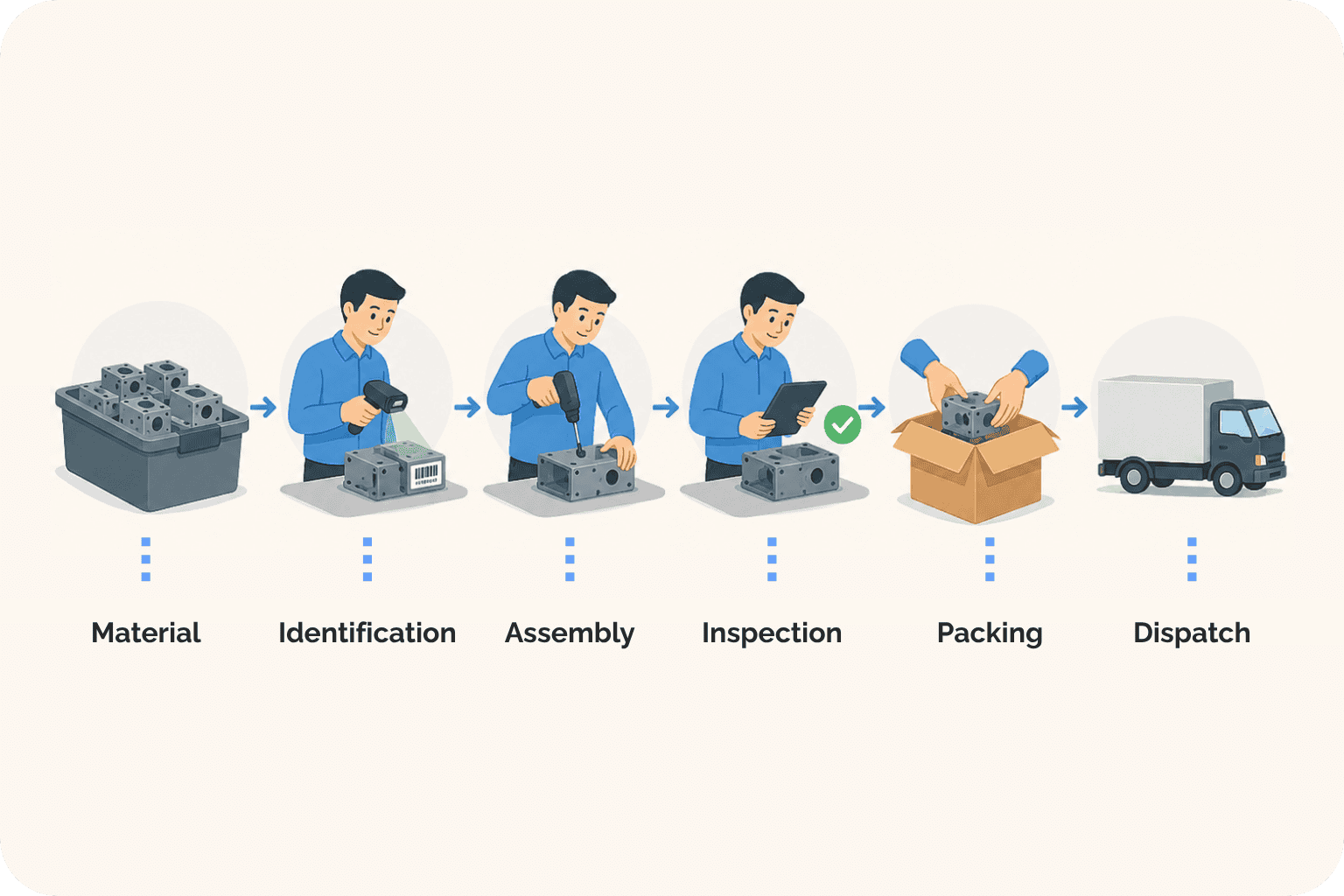
Map the full production flow from material intake through to final dispatch. The aim is to identify where traceability data is captured as the product moves through the process.
Start at receiving, where materials enter the system and are first identified. Then follow the product through each stage of assembly, noting where work is carried out and where information is recorded. Include test and inspection points, along with packing and shipping.
Focus on where data is recorded in practice, not just where it is expected to be. Gaps often appear at handover points between stages or where information is recorded later rather than at the time of work.
This should show where traceability data is created, who records it, and how it connects across the full process.
Standardise How Work
Is Recorded
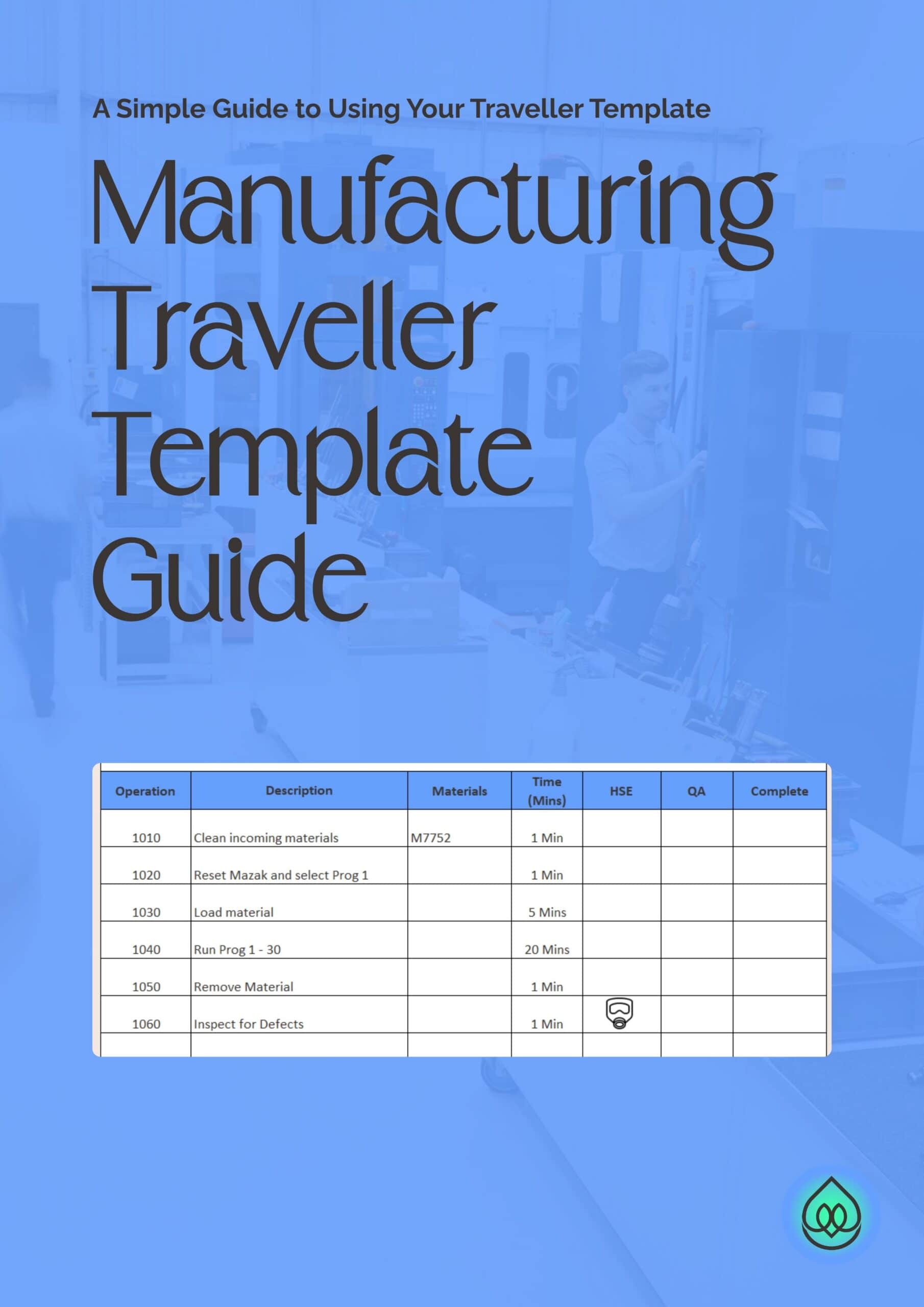
Use the Manufacturing Traveller Template to define process steps, inspections, and sign-offs in one place.
Step 3: Set Up Product Identification
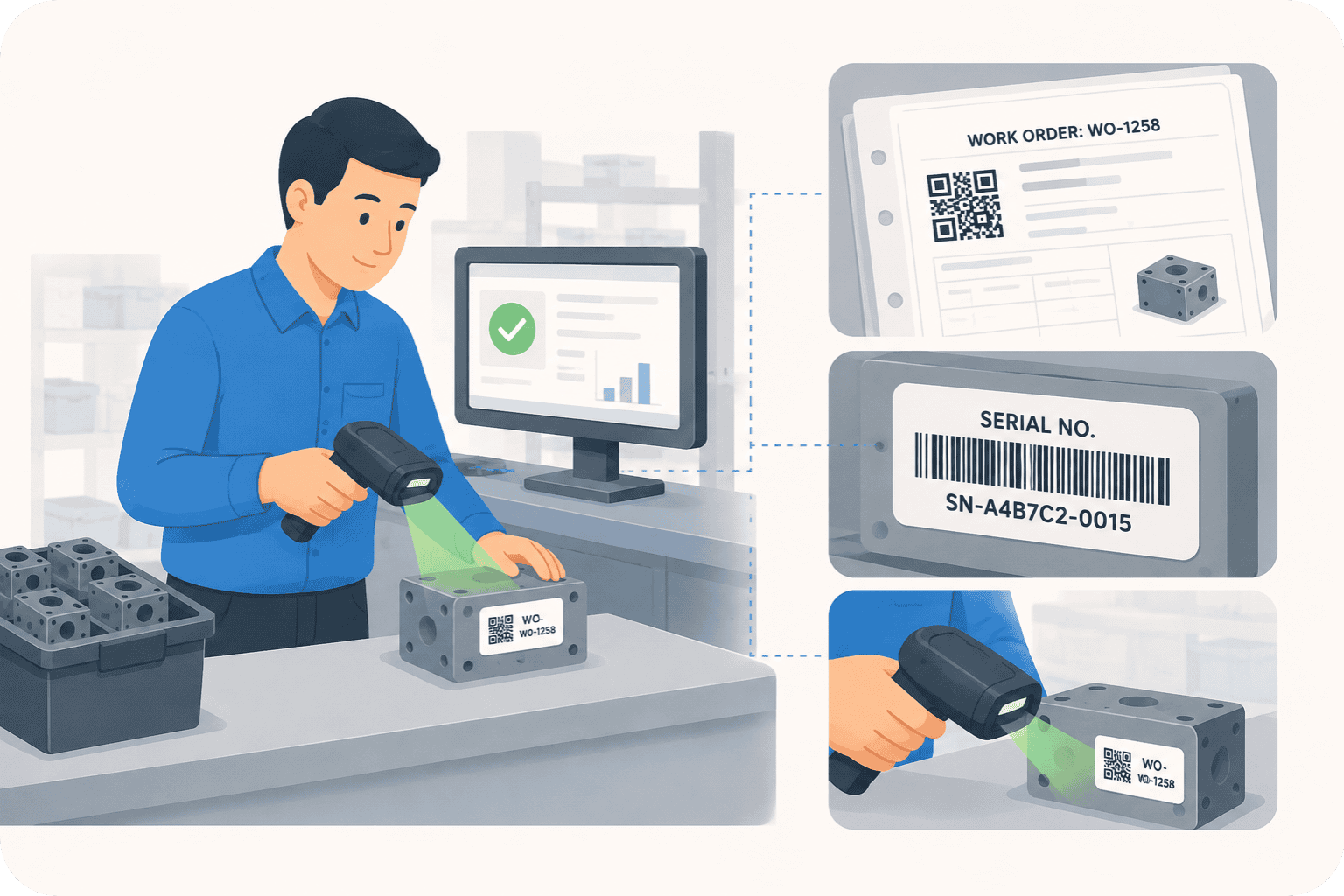
Choose a method to identify each product as it moves through production. This could be a serial number, batch number, barcode, QR code, or RFID tag, depending on how your process is set up.
Keep it consistent. The same identifier should be applied early and used at every stage, so each product can be tracked without relying on separate records or manual matching.
Avoid switching formats part way through the process. Once a method is in place, it should carry through from the first stage to final dispatch. If identification changes or is applied inconsistently, traceability becomes difficult to maintain, even if the rest of the system is defined.
Step 4: Define How Data Is Captured
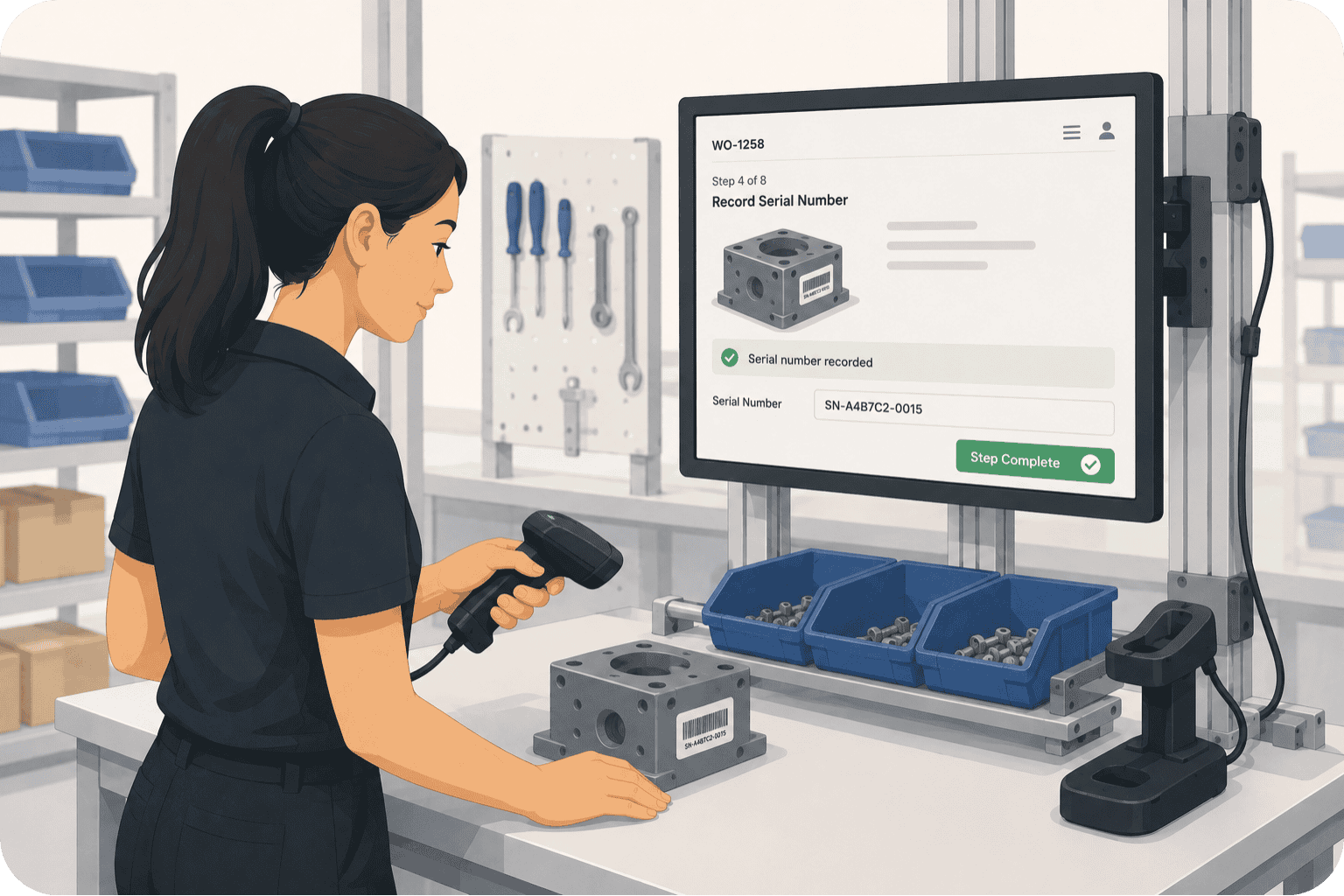
Decide how traceability data is recorded at each stage of production. This should be clear for every step so there is no ambiguity in how information is captured or who is responsible for it.
Define who records the data, whether that is the operator carrying out the work or the system capturing it automatically. Set when it is recorded, ensuring this happens as part of the process step rather than afterwards. Then confirm how it is captured, whether through scanning, structured input, or automatic collection from equipment.
Data should be recorded at the point of activity, not at the end of a shift or transferred later from paper or separate systems.
Find the Gaps in Your Traceability Process
Find where traceability is breaking down across shifts, paper records, spreadsheets, and manual processes.

Step 5: Make the Process Consistent
Set a clear standard for how each step is carried out so the process runs the same way every time.
Each stage should follow the same sequence, with required checks completed before the product moves on. This ensures traceability data is captured as part of normal production rather than added separately.
Apply this consistently across all shifts and operators so the outcome does not depend on who is doing the work.
Step 6: Decide How the Process Will Be Managed

At this stage, the process is defined. The next decision is how it will be managed day to day.
Manual approaches can work, but they rely on consistent behaviour. Steps may be followed differently across shifts, and data is often recorded after the fact or across multiple records.
If traceability needs to be consistent, the process must be controlled as it is carried out, not managed afterwards. This is where many teams move from manual tracking to a system that supports how data is captured during production.
Step 7: Validate and Maintain the Process
Once traceability is in place, check that it works in practice.
Each product should have a complete, connected record that can be followed without needing to combine information from multiple sources. Records should be clear enough to trace issues quickly when needed.
Review the process regularly and update it as production changes. This ensures traceability remains aligned with how work is carried out over time.
Moving Beyond Manual Traceability
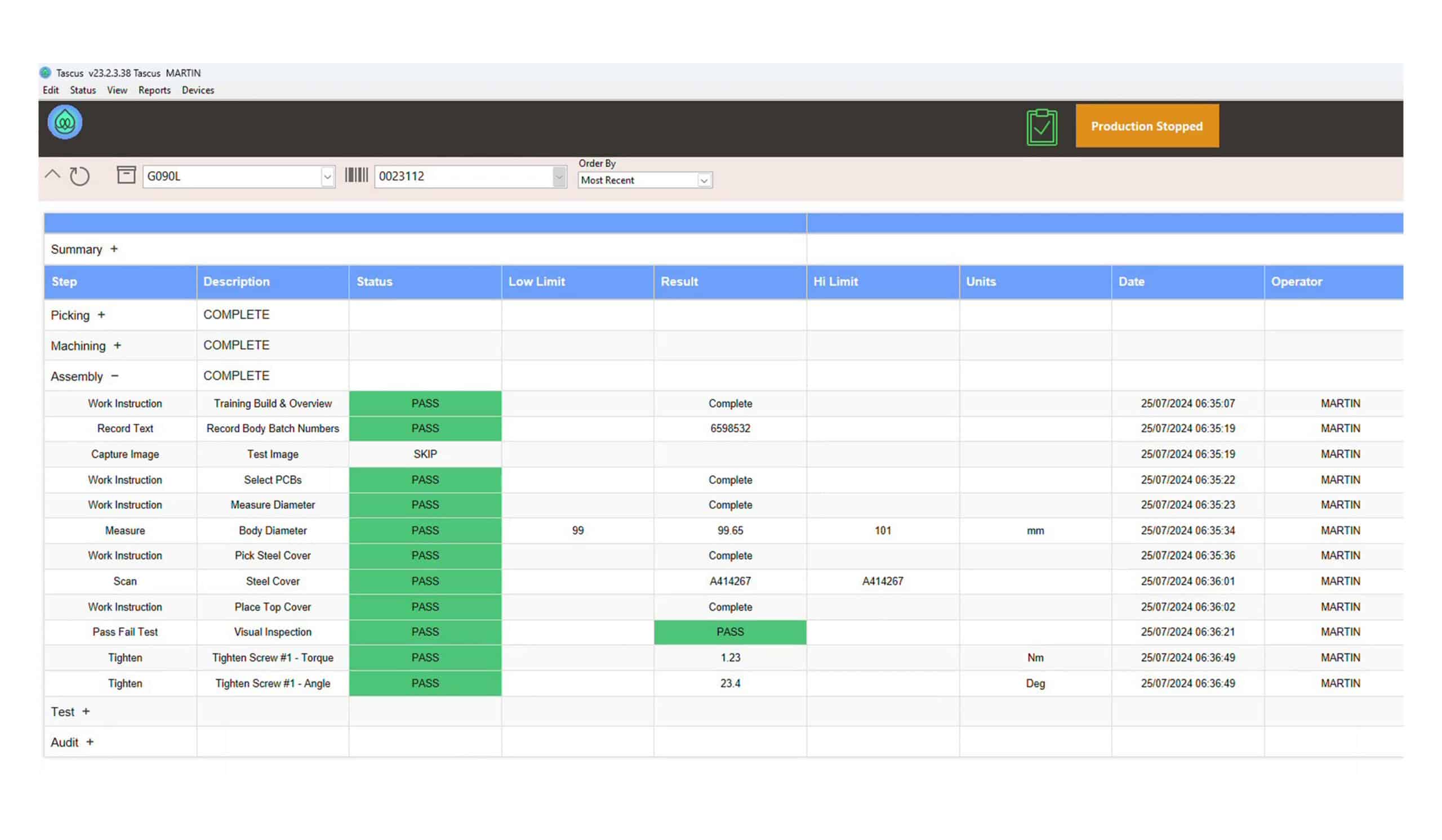
Manual traceability often breaks down during day-to-day production. It relies on people to record and maintain data, which leads to variation across shifts, missing records, and gaps that are difficult to trace back.
A production system, like Tascus, builds traceability into the process itself. Data is captured as work is carried out, creating a complete record for each product without the need to reconstruct it later.
Where Is Traceability Breaking Down?
Use the Traceability Gap Check to spot weak points in how production data is captured, tracked, and recorded across your process.
Review Your Production Workflow
If you are already using manual methods or systems but still seeing gaps, the issue is usually how the process is set up.
A Production Workflow Review looks at how work is recorded across your line, where traceability breaks down, and what needs to change to make it consistent.
Talk through your
production process
Discuss how production currently runs, where issues are
appearing, and what’s making consistency
harder to maintain.