
How to Prevent Customer Complaints in Manufacturing

Customer complaints in manufacturing are often caused by production issues that weren’t identified before products left the factory. Inconsistent processes, missed quality checks, poor traceability and communication gaps can all allow defects to reach the customer. While it’s important to investigate complaints when they occur, preventing them starts by improving quality during production.
In this article, we’ll explore the most common causes of customer complaints in manufacturing and practical ways to reduce them before products leave the factory.
What Causes Customer Complaints in Manufacturing?
Every customer complaint has its own circumstances, but many share the same underlying causes. Below are four of the most common production issues that contribute to recurring customer complaints in manufacturing.
Inconsistent Production Processes
When operators complete the same task in different ways, product quality can vary from one build to the next. For example, one operator may follow an experienced routine while another relies on outdated work instructions. Without a clear, standardised process, this variation can lead to inconsistent products and increase the risk of customer complaints.
Missed or Ineffective Quality Checks
In-process quality control is most effective when checks are completed consistently and at the right stage of production. If a critical inspection is missed or delayed until final inspection, defects may go unnoticed until significant time and materials have already been invested. In some cases, products may even reach the customer before the issue is identified.
Manual Recording and Poor Traceability
Paper records and manual data entry can make it difficult to maintain complete production traceability. If a customer reports a fault days or weeks later, incomplete production records may make it harder to identify who built the product, what checks were completed or whether other products could be affected by the same issue.
Communication Gaps Between Teams
Production information doesn’t always pass smoothly between operators, shifts or departments. An outdated work instruction, an unclear shift handover or a process change that hasn’t been communicated can all result in products being built differently. Without clear communication and consistent production controls, these issues can quickly become customer complaints.
Why Fixing One Complaint Isn’t Enough
Resolving a customer complaint is essential, but resolving the immediate issue doesn’t necessarily prevent it from happening again.
When a complaint is received, manufacturers often carry out a root cause analysis, identify the immediate cause and implement corrective actions. While this helps address the individual incident, it doesn’t always eliminate the conditions that allowed the problem to occur in the first place.
Preventing repeat complaints requires more than investigating defects after they’ve reached the customer. It requires understanding why the same production issues continue to occur.
The Causes of Repeat Complaints
Inconsistent Processes
Different operators, different methods and unclear work instructions all increase process variation, making defects more likely.
Reactive Quality
Relying on final inspection means problems are found after they’ve already happened, when rework and customer complaints are much harder to avoid.
Limited Traceability
Without complete production records, it’s difficult to identify trends, investigate root causes or prove what happened during production.
Temporary Fixes
Corrective actions are an important part of a Corrective and Preventive Action (CAPA) process. However, unless the production process itself is improved, the same issues are likely to return.
Want to Improve Production Consistency?
Download the Consistency Checklist to identify opportunities to improve consistency and reduce production defects.

How to Prevent Customer Complaints During Production
Preventing customer complaints starts by creating a production process that consistently delivers the right result. Rather than relying on final inspection to identify defects, manufacturers should focus on building quality into every stage of production.
Standardise Production Processes
Standard work ensures every operator follows the same sequence of work, complete the same quality checks and record the same production information. Clear, standardised processes reduce variation between operators and shifts, making product quality more consistent and reducing the likelihood of defects reaching the customer.
Build Quality Into Production
In process quality control is most effective to ensure quality checks are completed as part of the manufacturing production process. Embedding inspections and confirmations throughout production allows issues to be identified and corrected before they progress to the next stage, reducing both rework and customer complaints.
Capture Complete Production Records
Production records should be captured as work is completed, strengthening production traceability and creating a complete manufacturing history for every product. This not only supports faster investigations when complaints occur but also helps manufacturers identify recurring issues, improve processes and demonstrate compliance when required.
Continuously Improve Production Processes
Every customer complaint is an opportunity to improve the manufacturing process. By identifying the root cause, updating work instructions, strengthening quality checks and standardising the improved process, manufacturers can reduce the likelihood of the same issue occurring again.
Consistency Prevents Complaints
The most effective way to reduce customer complaints isn’t to become better at investigating them. It’s to create production processes that prevent them from happening in the first place.
By the time a customer raises a complaint, the opportunity to prevent the issue has usually passed. Manufacturers that standardise production processes, build quality into every stage of production and maintain complete production traceability are far more likely to identify problems before products leave the factory.
Improve Production Consistency with Tascus
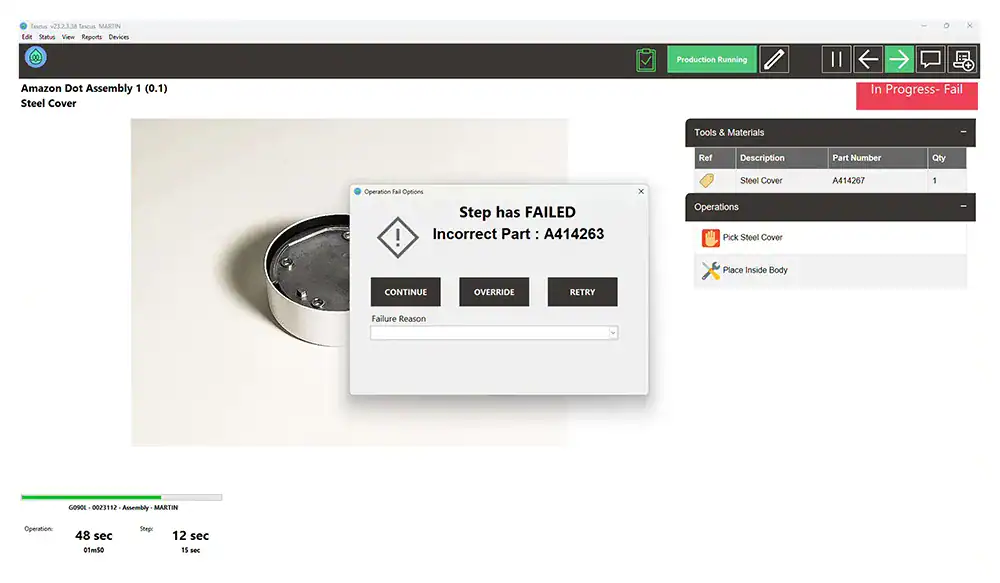
Tascus helps manufacturers standardise production processes, embed quality checks into the manufacturing workflow and capture complete production traceability as every product is built.
By guiding operators through the correct process and recording production information as work is completed, Tascus helps reduce variation, improve quality and prevent defects from reaching the customer.

Review Your Production Line
The Production Review identifies where variation and delays are happening in your process.