
What Your Manufacturing KPIs Aren’t Telling You
Most manufacturing KPIs tell you what happened, but not what it took to get there. A record month on the dashboard can look very different from the shop floor.
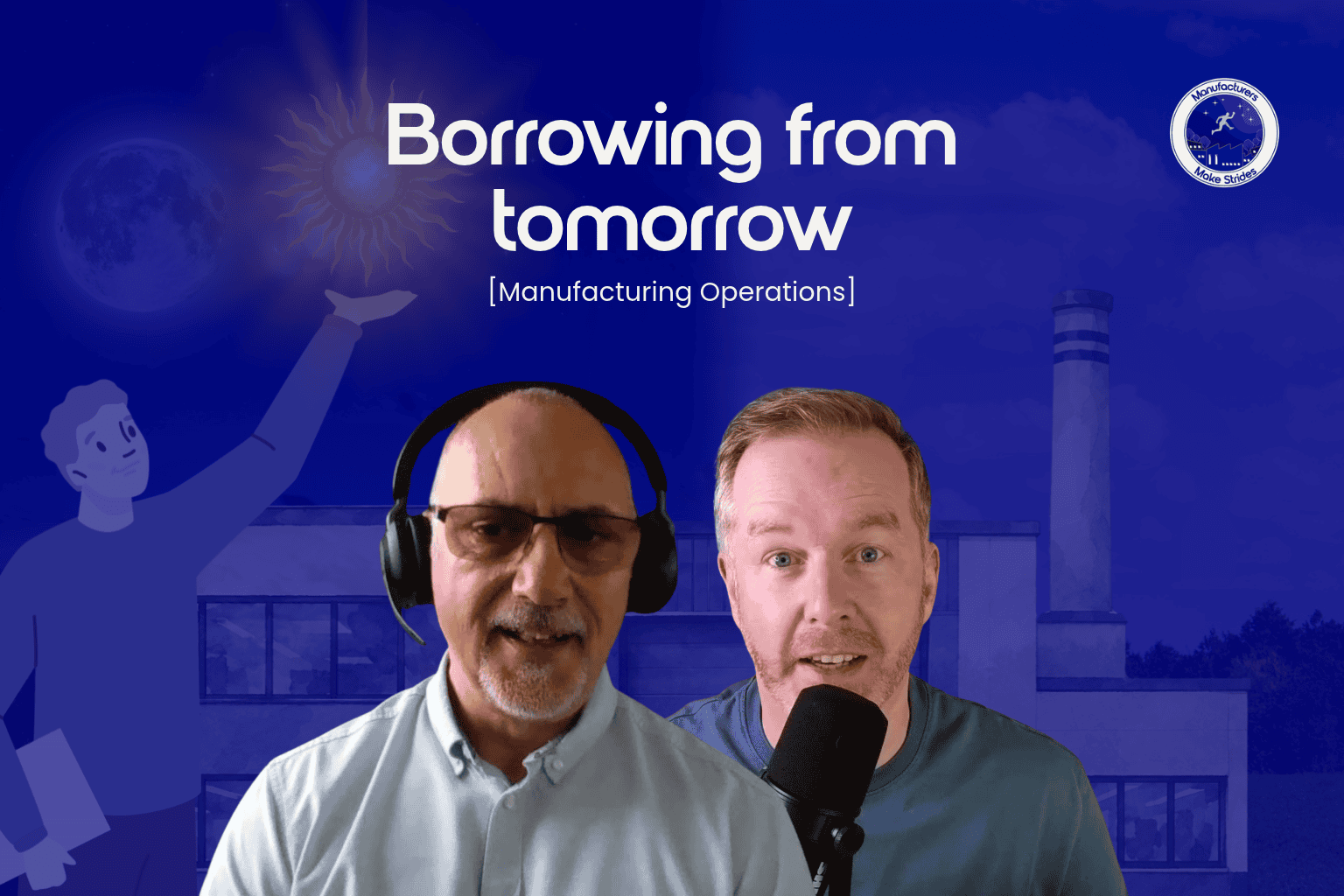
In this episode of Manufacturers Make Strides, Martin is joined by John Dean, founder of Process Pathway Strategies and author of Built to Carry, to explore the hidden effort behind manufacturing performance. John started out at 16, sweeping the floor of a pallet manufacturer, and worked his way up to foreman, then site manager, and eventually managing director of his own pallet company. He has also worked across plastics, concrete, steel and chemicals.
Together, they talk about building a stable factory that doesn’t rely on heroics, and why that stability has to come before growth. Here are some of the ideas from the conversation that stood out.
Why manufacturing KPIs only tell half the story
John describes himself as a data junkie, and he’s built plenty of dashboards in his time. However, he has also sat in leadership meetings celebrating a record month while the shop floor told a very different story.
He gives the example of on-time in-full delivery. On paper, OTIF was sitting at 98%. Behind that number, though, a haulier hadn’t turned up until seven o’clock, two hours after the shift finished. Two of John’s team stayed late to load the wagon, and the reason the haulier was late was that the business’s transport account had been put on hold over a late payment. Operations then had to chase finance and the transport company just to get the order out.
None of that showed up in the KPI. As John puts it, KPIs tell you what happened, but not what had to happen to achieve it. He calls this borrowing from tomorrow. Skipped maintenance, constant overtime and tired teams can keep the numbers green for a while, but sooner or later that debt comes due.
How to record exceptions alongside your KPIs
John’s answer is to record exceptions next to the KPIs. In practice, that means asking the team to note every time they had to chase a supplier, planning, finance or customer service to get a job done. In his experience, operators are more than happy to do it, because they don’t want to be chasing in the first place.
These exceptions are then reviewed in the daily meeting alongside the shift KPIs. When the same exception keeps coming up, the team raises it as a concern. They describe the problem in their own words, provide evidence of how often it has happened, set out what should happen compared with what actually happens, and explain the impact on operations.
This gives leaders a calm, factual picture rather than a complaint. It also gives them a useful way into conversations about growth. If the business wants to take on another 10 or 20% of work, the exceptions show where today’s capacity is already being used up. John also points out that many exceptions sit between two roles, so the work drifts down to whoever happens to know how to do it, rather than staying with the person who should own it.
Why restoration comes before transformation
Many of the SMEs John works with have already tried lean or 5S. They’ve painted half the factory and put signage up, yet they’re still firefighting to get orders out every day. This means their teams struggle to keep up with audits and improvement activities on top of the day job.
For John, the starting point is restoration. Before transforming anything, a business needs to get back to doing what it should already be doing, and doing it reliably. He uses the acronym FOCUS (Follow One Course Until Successful) and works on one concern at a time, making sure each fix is sustained before moving on to the next.
He’s clear that this isn’t quick. An operation that has been drifting for ten years won’t be fixed with a single Kaizen event. Instead, it takes steady, disciplined effort, with the team choosing the areas that cause them the most pain so that people are genuinely bought in. The result is a factory that’s stable enough to grow.
In this episode
- What a stable factory looks like
- Stepping back as a leader
- Working at the right altitude
- Borrowing from tomorrow
- What manufacturing KPIs don’t show
- Recording exceptions
- Raising concerns with evidence
- Focusing on one improvement at a time
- Coaching over taking over
- Restoration before transformation
Our Standout Q&A
Martin: Tell me about KPIs at this point. Do they help in a situation like this?
John: To a certain extent. I’m an absolute data junkie, and I think that’s one of the things that led me on this journey. A number of years ago, I learned about building dashboards with Power BI and collecting lots and lots of information. But when you’re close to the shop floor, you can see the KPIs don’t tell you the full story. I’ve sat in senior leadership meetings where everyone’s patting each other on the back for another record month. You look out on the factory floor, and it doesn’t look like that. People are almost on their knees. They’ve done so much extra work and so much chasing. They’re falling out with suppliers, and they’re falling out with each other. KPIs are absolutely fantastic, but they only tell you what happened. They don’t tell you what had to happen to achieve it.
Quick Win
At the end of every episode, we ask our guests to leave listeners with one action they can put into practice.
John’s quick win is to take a no-blame stance and follow a process from start to finish. Follow the paperwork trail and the email trail, and ask what happens next at each step. The aim is to be genuinely curious rather than trying to catch anyone out.
John believes most businesses will be surprised by what they find. For example, there will usually be at least one or two people with their own tracker or spreadsheet that quietly holds the system together. As a business grows, it often outgrows its original systems. As a result, people step in with workarounds and their own knowledge to keep everything moving.
About John Dean

John Dean is the founder of Process Pathway Strategies, which works with manufacturing SMEs to build stability before growth. He has spent around 40 years in manufacturing, including more than 20 in the timber industry, where he went from sweeping floors to running his own pallet company.
John is also the author of Built to Carry, which looks at the gap between what the numbers show and the effort it takes to achieve them. It’s available on Amazon, including a Kindle version.
Resources
Keep Listening: